Before World Water Day, There Was a Mission
Years before there was a United Nations’ World Water Day — held on March 22 every year since 1993 — Bread and Water for Africa® was working to provide clean water to thousands of people living in sub-Saharan African countries.
In fact, as it was in the first year of our now 40-year history, clean water, specifically WASH (Water, Hygiene and Sanitation), remains a major priority of our work.
UN-Water, whose role “is to ensure that the United Nations ‘delivers as one’ in response to water-related challenges,” notes that “World Water Day celebrates water and raises awareness of the 2.1 billion people living without access to safe water.
“It is about taking action to tackle the global water crisis.”
Every year, UN-Water — the UN’s coordination mechanism on water and sanitation — sets the theme for World Water Day, such as Leveraging Water for Peace in 2024 and Glacier Preservation last year.
This year, the theme is ‘Water and Gender – Where Water Flows, Equality Grows’, a significant concern for all of us here at Bread and Water for Africa®, as in the sub-Saharan Africa countries where we operate WASH programs, it is girls and women who bear the brunt of collecting water for their families, to their own detriment.
“Without safe water, sanitation, and hygiene close to home, women and girls bear a heavier burden than men and boys,” states UN-Water.
“They collect and manage water.
“They care for people made sick by unsafe water.“
They lose time, health, safety, and opportunities. And they are often left out of decision-making.
“This makes the global water crisis a women’s crisis.”
And as UNESCO (the United Nations Educational, Scientific and Cultural Organization) notes:
“Although tangible progress in the provision of water, sanitation and hygiene services has been made, significant disparities persist.
“The poorest and most vulnerable of the world’s population remain the most affected, where women and girls still bear most of the responsibility for securing water to households.
“This leads to physical and mental stress, limiting their time and opportunities for education, productive work, and social activities.”
Over the decades, Bread and Water for Africa® has supported clean water and WASH programs in nearly a dozen countries, including Cameroon, Chad, the Democratic Republic of the Congo (DRC), Ethiopia, Kenya, Malawi, Mozambique, Sierra Leone, Tanzania, Uganda, Zambia, and Zimbabwe, benefiting hundreds of thousands of individuals.
A History Written in Water — and Measured in Lives Saved
Throughout our history, Bread and Water for Africa® has been working to ensure that tens of thousands of African children, women and men have had access to safe, clean drinking water essential to their survival every year.
Water contaminated with cholera, dysentery, hepatitis A, schistosomiasis, and/or Typhoid fever can cause severe diarrhea, dehydration, and related health complications leading to death, especially for children under age 5.
“Safe water has been on the forefront of our mission since our founding, and working together with our supporters and in-country, grassroots partners toward that mission has saved untold tens, perhaps hundreds, of thousands of lives — all thanks to the accessibility to safe, clean drinking water,” states Bread and Water for Africa® executive director Beth Tessema.
For example, in 1992 Bread and Water for Africa® provided grants to the Baptist General Conference Mission (BGCM) for the purchase of AfriDev hand pumps to be installed in water wells in the Debre Libanos region in the central highlands of Ethiopia, where most of the inhabitants make their living by farming.
Obtaining clean drinking water has been a serious problem in the region for many, and it was estimated at that time that 75 percent of all village diseases in the country were caused by unclean drinking water and unsafe water sources and poor sanitation remain a leading cause today.
However, for residents in the targeted villages, the AfriDev hand pumps enabled them to tap the clean underground water supply in this area. The simple construction of the AfriDev pump allowed them to operate and maintain it themselves, with no outside assistance.
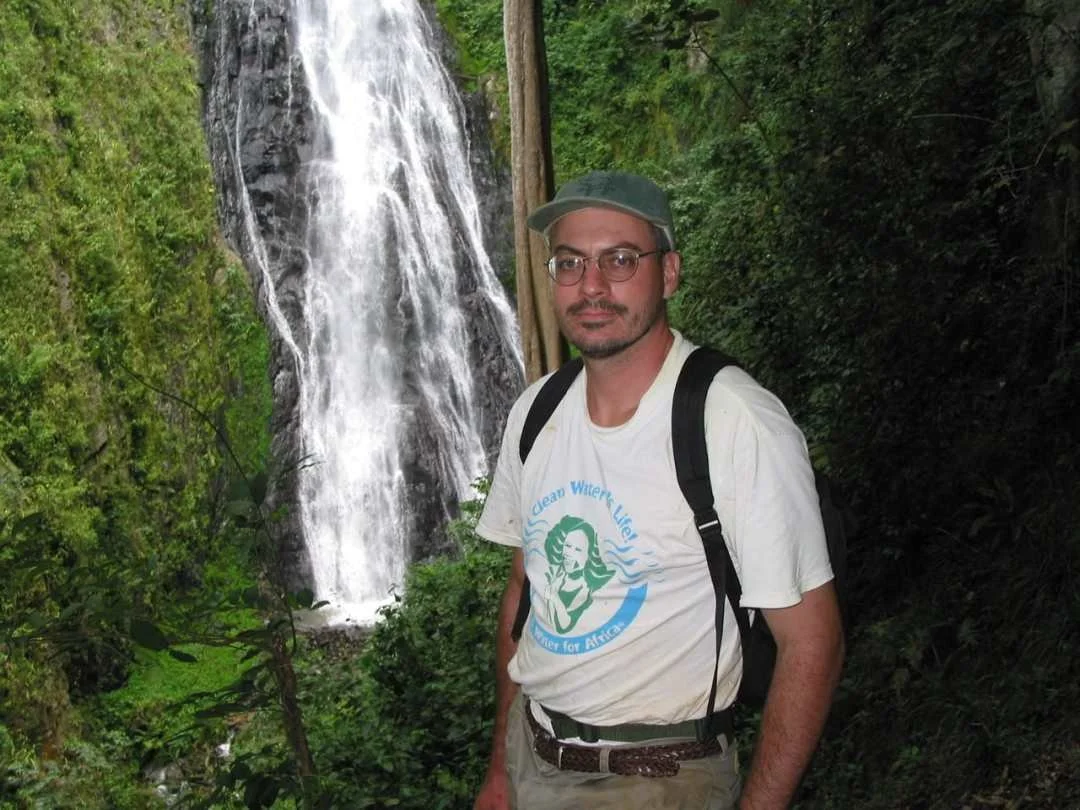
In 1993, Bread and Water for Africa® initiated a two-year project to complete a water delivery system that served more than 10,000 individuals in the rural Bubukwanga District in western Uganda, which is isolated by the Rwenzori Mountain range from the rest of the country.
This situation had kept many villages’ water supply systems in the district in a dangerously outdated condition, forcing residents to collect water from contaminated streams and stagnant pools — both breeding grounds for waterborne diseases, the deadliest of which is cholera.
By the year 2000, Bread and Water for Africa® had already been providing support to the Kipkeino Primary School and Baraka Farm in Eldoret, Kenya, for six years, operated by Bread and Water for Africa® international spokesperson Phyllis Keino.
But as the number of children at the school grew and the farming operations increased, she came to the realization that something had to be done to meet the growing demands for safe, clean water for the children, as well as water to irrigate the farm, particularly in times of drought.
To meet the need for water for the children and irrigation for crops to feed them, Bread and Water for Africa® embarked on a plan to reclaim about 80 acres of farm wetlands and collect the water in a reservoir.
Starting in 2002 and continuing to 2007, Bread and Water for Africa® built seven borehole/water wells in Vimpa Village, Manica Province, in Mozambique.
In 2005, Bread and Water for Africa® began its efforts in clean water accessibility in Sierra Leone by providing nearly $100,000 in grant funding to two organizations in the country for projects, both of which included the digging of water wells.
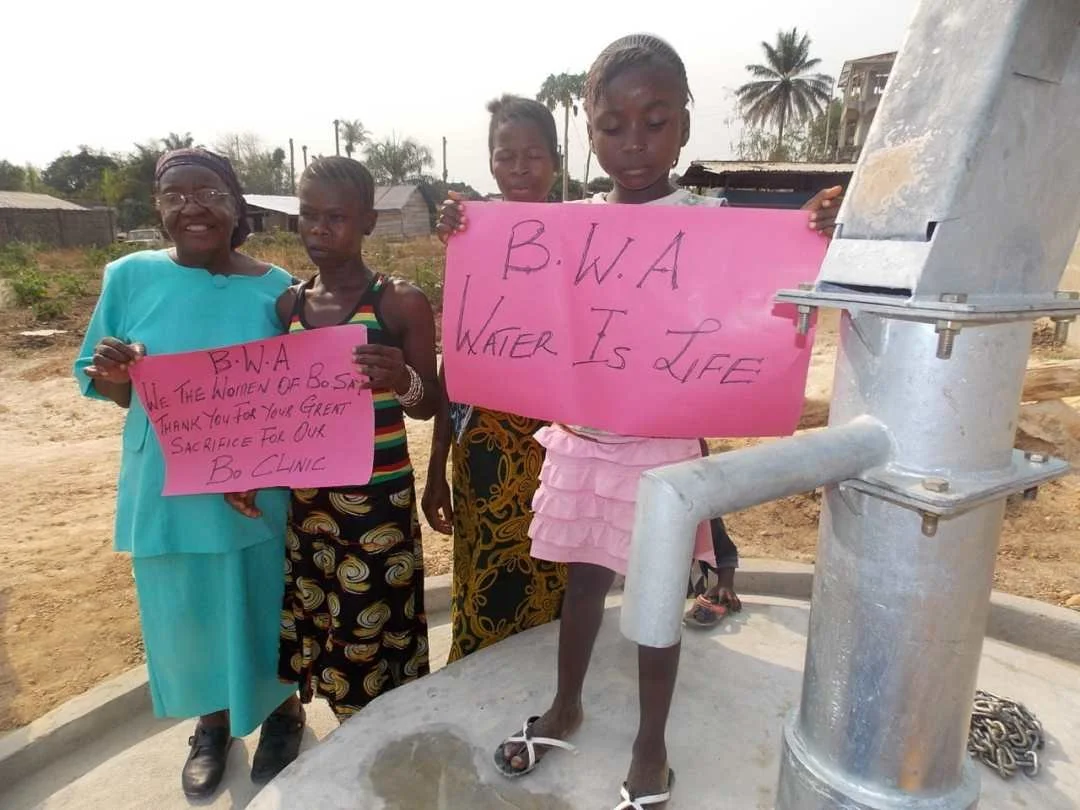
Among the projects was Bread and Water for Africa®, which provided a grant to our in-country partner, Faith Healing Development Organization (FHDO), for the construction of a health care center in Kenema, which included digging a water well to serve the clinic and the surrounding community.
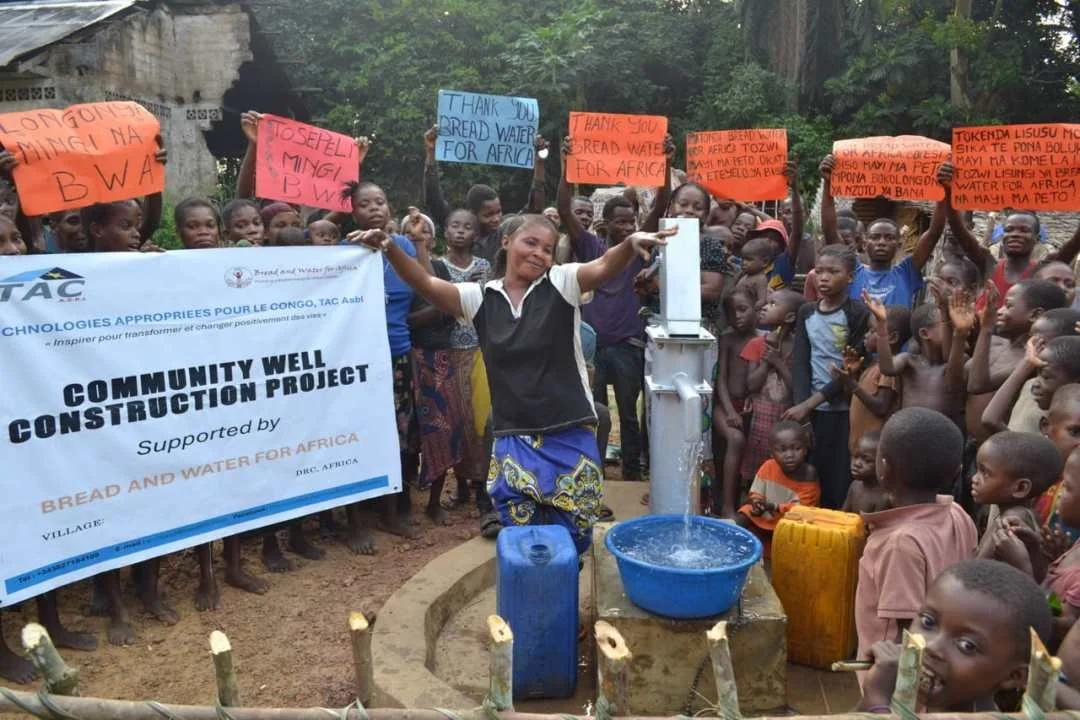
Since 2020, we’ve embarked on an exciting expansion of our WASH initiative! Beth highlights that from 2020 to September 2025, we’ve successfully completed 287 projects—an incredible 53% of our total 595 WASH projects to date.
Looking Ahead to 2026
For fiscal year 2026, Bread and Water for Africa® plans to focus intensively on our WASH program in sub-Saharan Africa to effectively address these critical needs.
“This year, our WASH program is strategically designed to fund 65 targeted projects,” notes Beth.
Key components of this initiative include:
The construction of new wells,
Construction of school toilets,
The implementation of spring water protection projects, and
Repairing broken wells at community centers, health facilities, and educational institutions.
“This multifaceted approach aims to enhance water access and improve sanitation conditions across the targeted regions,” Beth shared.
Words from Our Community Partners: Where Access to Water Means Safety — and Having a Toilet Means Dignity
In Uganda, David Ssagala, country director of our partner Bega Kwa Bega (BKB – Shoulder to Shoulder) notes that about one-third of the population in its service area does not have access to clean water.
To help address the severe clean water deprivation, Bread and Water for Africa® is teaming up with BKB this year to protect freshwater spring sites in 15 communities reaching 750 households, providing access to safe and clean water to approximately 3,750 individuals, not including those attending schools, religious centers, and medical clinics, which will also greatly benefit from the clean water access.
Currently, says David, “There are poor conditions of health, sanitation, and hygiene in the villages due to lack of clean water sources.
“The present wells are not protected, making them dangerous and contaminated since they are shared with animals,” he added. “These water sources are also too far from most households and schools.”
He also pointed out how “gender inequality” affects the girls and women in the community, beyond the obvious health concerns.
“A lot of school and production time is wasted by girls and mothers who have to trek long distances for water, which is most of the time unsafe.
“The long distances moved by girls also pose a security threat and expose them to all kinds of abuse.”
Also, this year Bread and Water for Africa® is working once again with our partner in Malawi, the Faithful Heart Foundation (FHF), to ensure that hundreds of students — primarily girls — have access to safe and sanitary toilet facilities at school.
Among the projects is a latrine for students attending the Ndalapa School at Gogo Village in the Chikwawa District of the country, where 1,098 students (478 girls and 620 boys) which currently “has no toilet, therefore it affects students brings fear and danger to students emotionally, mentally and physically as they use the bush,” reports FHF chairperson Alex Steven Bango.
“Students are defecating in the bush which makes some learners deserting classes and missing some lessons which leads poor performance during end of term examinations that leads many girls drop out school because of poor results,” he told us.
In addition, he noted that because of the current situation, “ attendance of students is very low because many of them become shy and not motivated as they were seen coming from bush.”
Tragically, the result is that girls are being sexually assaulted, with some even becoming pregnant and testing positive for HIV, Alex told us.